

“Enter into children’s play and you will find the place where their minds, hearts, and souls meet.”
-Virginia Axline, pioneer of non-directive play therapy
Mental Health Therapy For Kids
You likely didn’t picture therapy being necessary, but lately, raising your child has become unexpectedly challenging. Your child is struggling—whether it’s explosive outbursts, constant defiance, or withdrawing into deep silence—they're having trouble coping with everyday life. It can feel exhausting when all your sincere efforts to create consistency and offer tools don't seem to make a difference. You might lose count of the daily meltdowns or find yourself missing the joyful, playful child who now hides behind zoning out and shutting down. It's incredibly frustrating when your attempts to understand what's wrong are met with silence, maybe because they lack the words or simply aren't ready to open up. You're here because your love for your child is profound, and you know a change is essential. The encouraging news is that you don't have to navigate this struggle alone.
You want the best for your child, and play therapy can help. It's a proven method that meets your child where they are developmentally. Through therapeutic play, they learn to process strong emotions, build confidence, regulate their moods, and resolve inner struggles in a safe space.
At Iris Mental Health & Counseling, I offer play therapy for children. This approach:
Is great for ages 4-preteen.
Is developmentally appropriate.
Uses toys, sensory materials, art supplies, and creative activities to communicate and work through challenges. Virtual services also available.
Believes when given safe and accepting conditions, children have a natural, inborn drive to heal, grow, and reach maturity.
Strengthens their ability to regulate emotions and cope with stress.
Processes and resolves difficult memories or traumatic events.
Boosts essential new life skills for handling challenges.
Cultivates improved self-worth.
Deepens relationships at home, in the classroom, and elsewhere.

What to Expect
Getting Started
Before our first session, you’ll fill out some paperwork about what’s bringing you and your child to therapy. This gives me a helpful overview before we meet.
Intake assessment (50 mins)
Our first appointment is often just with parents or caregivers, depending on your child’s age and presenting concern. We’ll talk more in depth about what your child is struggling with, go over the paperwork together, and discuss your goals for therapy.
Ongoing Sessions (45 mins + parent update)
I meet with your child in the playroom for 45 mins while a parent or guardian stays in the waiting area. At the end, I’ll provide a brief update to share progress and/or ideas for support at home. You’re always welcome to schedule longer update sessions if you’d like more time to talk.
Frequency
I recommend weekly sessions. The trust and safety your child feels in the playroom are vital to their growth and healing. As your child grows and gains skills, we may shift to biweekly sessions and adjust as needed. My goal is to help your child thrive—and eventually not need me!
Parent Involvement Matters
Your involvement is a key part of the therapy process. I work closely with parents through regular check-ins and ongoing collaboration to help support your child’s growth both in and outside of the playroom.
Rates & Insurance
All play therapy sessions are $125. I’m not in-network with insurance, but I’m happy to provide a superbill for potential out-of-network reimbursement. Unfortunately, I am unable to see Medicaid clients.
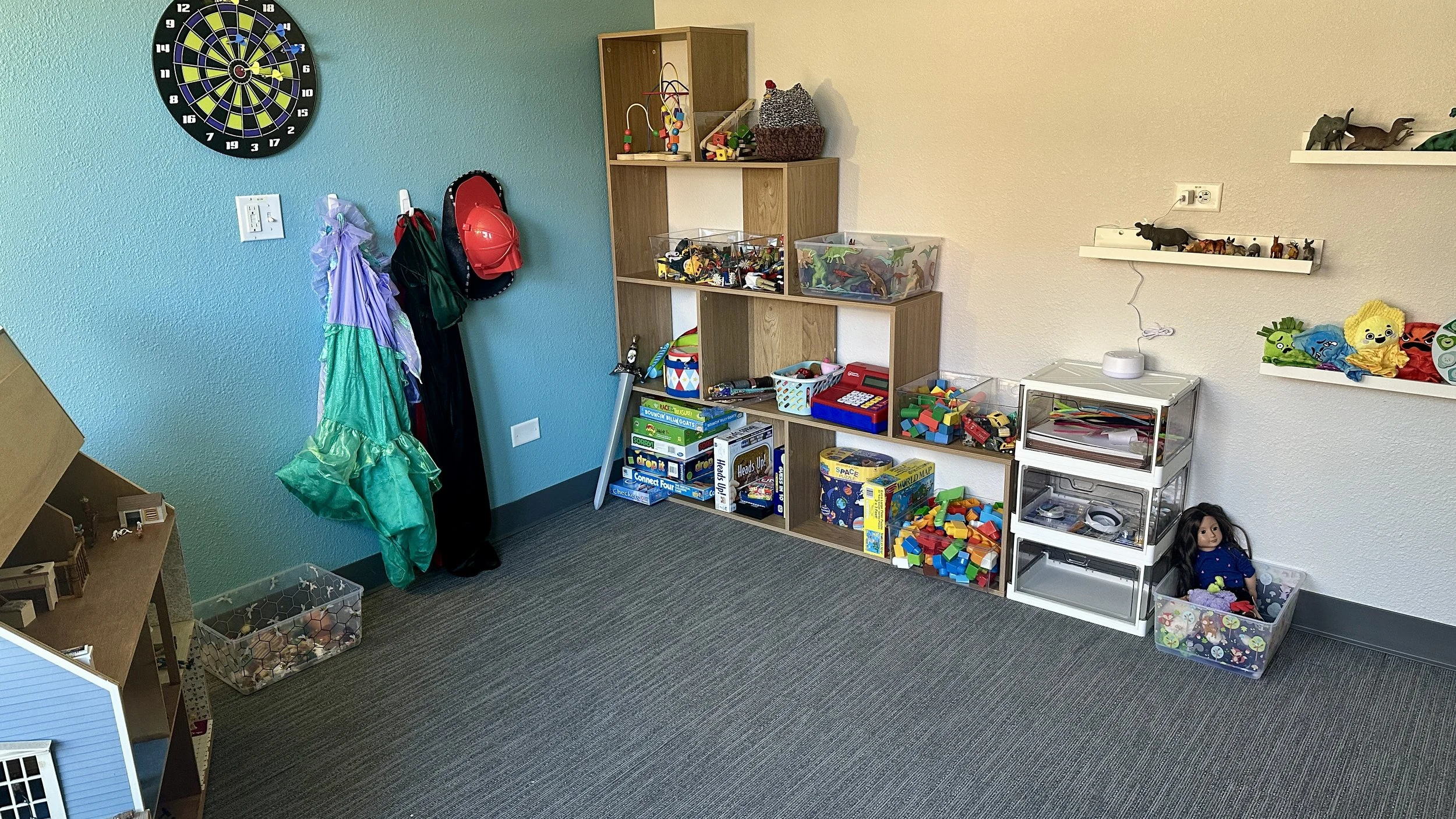
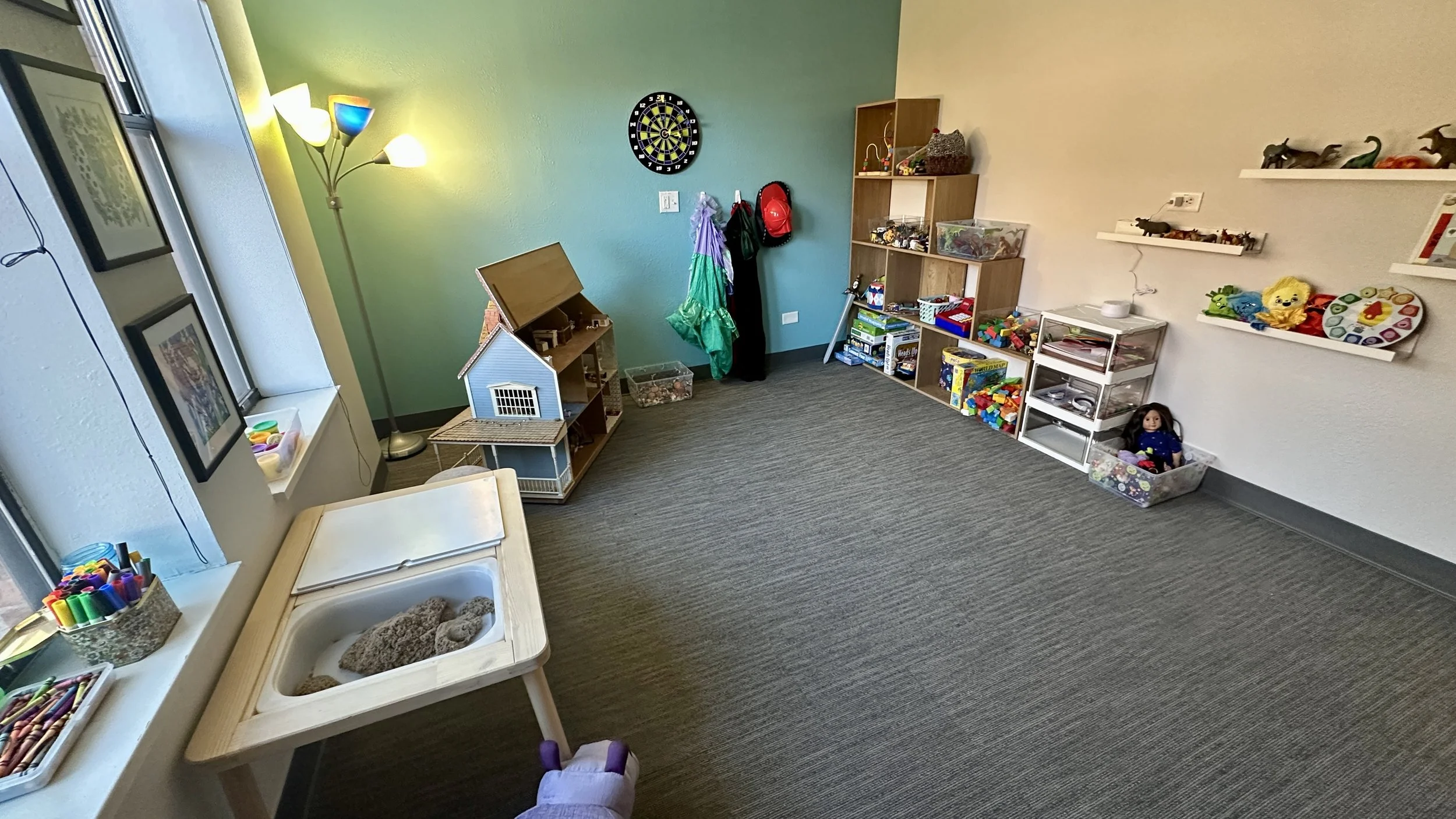
In-office playroom with dollhouse, books, sensory toys, building toys, dress up, pretend play items & more!

Waiting room with coffee, water, snacks & magazines while parents hang.
Why Play Therapy?
-

Facilitates Communication
When kids don’t have the words for what they’re feeling, they show us through play. Big emotions—like fear, sadness, or confusion—often come out in quiet, everyday moments with toys, stories, or imagination. In therapy, play becomes your child’s language, giving them a safe way to express what’s going on inside. I gently help them put words to feelings, build stronger connections, and find healthy ways to cope. Over time, your child will gain more confidence and resilience.
-

Fosters Emotional Wellness
Play offers children a safe and gentle space to express feelings like anger, sadness, or worry, helping them feel more secure and in control. What may look like simple imagination is often how they work through confusing or stressful experiences. At the same time, play brings joy and creativity. In therapy, I follow your child’s lead, creating a safe space to support their healing and growth. Even small moments in play can lead to meaningful changes in daily life.
-

Enhances Social Relationships
Through play, children learn how relationships work—how to build trust, set boundaries, and connect with others. In therapy, I join your child’s emotional world and gently guide them as they explore communication, problem-solving, and understanding others. As they play out different roles and explore emotions, they begin to process experiences, develop self-awareness, and gain confidence in their ability to relate to others and navigate the world around them.
-

Increases Personal Strengths
Play gives kids a sense of control in a world that can feel overwhelming. As they solve problems, make choices, and work through challenges in play, they quietly build confidence and discover their strengths. In a space where there’s no pressure to get it right, they practice resilience, take healthy risks, and learn to bounce back. These small wins add up—helping your child grow more patient, persistent, and self-assured over time.
Ready to get started?
If you think this might be a good fit for your child, I’d love to connect. Whether you’re ready to book an appointment or just have a few questions, feel free to reach out—I’m here to help.